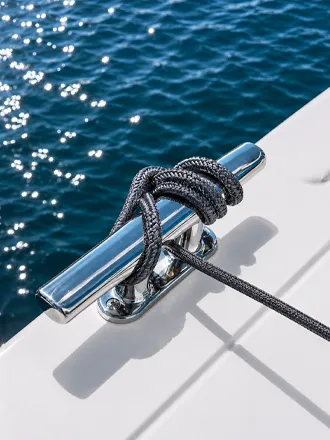
A shackle may be small, but choosing the wrong shape, material, pin style, or size can create poor connections and unnecessary wear. For boat builders, rigging suppliers, and marine hardware distributors, understanding Dee shackles, bow shackles, and other marine shackle types makes product selection much easier.
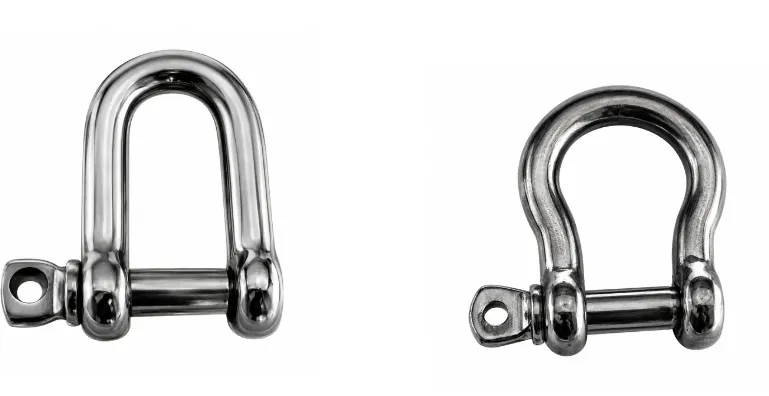
A Dee shackle has a narrower D-shaped body and is commonly chosen for more direct connection arrangements, while a bow shackle has a wider rounded body that offers more room for multiple or wider connections. The right marine shackle should be selected according to application, connection geometry, material, pin design, dimensions, and the product’s specified performance data.
What Is a Marine Shackle?
A shackle is a removable metal connector used to join different components in marine, rigging, anchoring, and general fastening systems.
The basic structure usually consists of:
- Shackle body
- Two eyes
- Removable pin
- Threaded, captive, key, or other pin mechanism
A shackle can connect chain to other hardware, attach a rope eye to a fitting, connect rigging components, or form part of an anchoring system.
For professional buyers, however, the word “shackle” is too broad.
Different products include:
- Dee shackle
- Bow shackle
- Long Dee shackle
- Twisted shackle
- Key pin shackle
- Flat shackle
- Snap shackle
- Swivel snap shackle
- High tensile shackle
Each design solves a different connection problem.
That is why distributors should build a marine shackle range around application rather than simply stocking several sizes of one model.
What Is the Difference Between a Dee Shackle and a Bow Shackle?
The most visible difference is the shape.
A Dee shackle has relatively straight sides and a narrower body. A bow shackle has a wider, more rounded body.
The narrow shape of a Dee shackle can make it a practical choice when the connection remains relatively aligned.
The wider bow of a bow shackle provides more internal room. This can help when the mating component is wider or when the connection requires greater freedom of movement.
However, shape alone does not determine suitability.
You still need to consider:
- Material
- Pin type
- Shackle dimensions
- Mating hardware
- Direction of loading
- Product specification
- Intended application
For B2B purchasing, the safest rule is simple:
Choose the shackle from the connection requirements first, then compare material, size, pin design, and technical data.
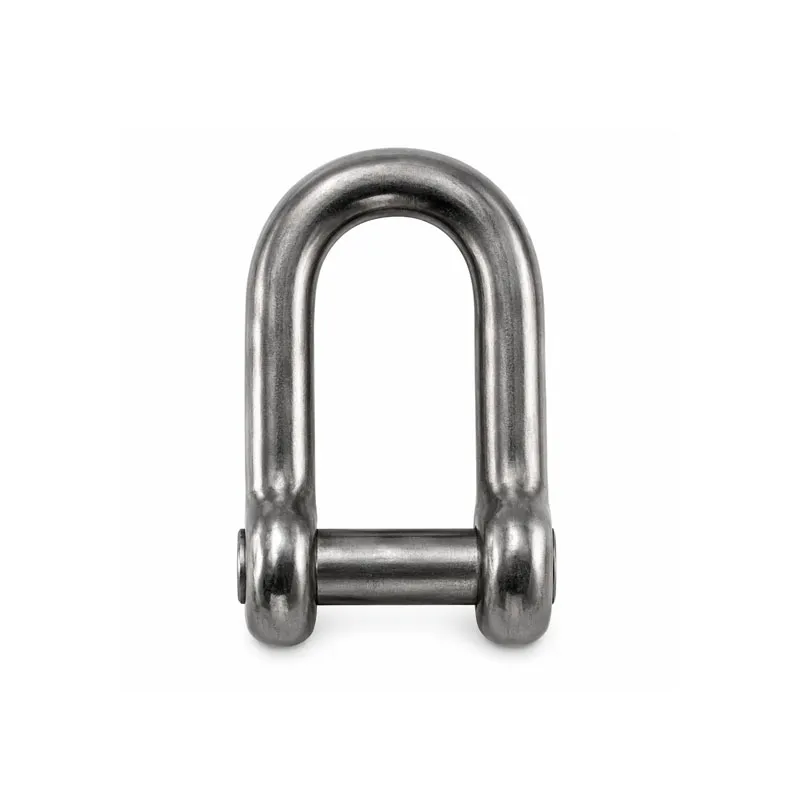
When Should You Choose a Dee Shackle?
A Dee shackle is one of the most recognizable forms of rigging hardware.
Its narrower body makes it well suited to many straightforward connection arrangements where the load and connected parts remain relatively well aligned.
Typical marine and rigging systems may use Dee shackles with:
- Chains
- Rope eyes
- Thimbles
- Swivels
- Turnbuckles
- Eye bolts
- Other rigging fittings
HIGRACE’s shackle range includes different Dee-style configurations, including standard Dee shackles, long Dee shackles, and specialized pin designs.
A buyer should check whether the internal width and pin diameter match the mating component.
For example, a shackle that fits through a chain link still needs enough clearance to move properly without creating unwanted contact or binding.
This is especially important when sourcing shackles together with marine chains or other connected hardware.
When Is a Bow Shackle a Better Choice?
A bow shackle has a wider rounded body that provides more internal space than a typical Dee shackle.
This design can be useful when:
- The connected fitting is wider
- More movement is required
- Several connection elements need additional room
- The shackle forms part of an anchoring or mooring connection
- Connection geometry is less linear
Because bow shackles are common across marine, anchoring, and rigging markets, they are often an important category for distributors.
Still, buyers should not assume that a wider body automatically means a higher working capacity.
The actual strength depends on:
- Material
- Manufacturing method
- Body diameter
- Pin diameter
- Product design
- Heat treatment where applicable
- Manufacturer testing
- Specific model rating
When purchasing for load-bearing applications, use the manufacturer’s stated technical data rather than judging strength from appearance.
How Do Different Shackle Pin Types Affect Selection?
The shackle body often receives most of the attention, but the pin design is just as important.
HIGRACE’s product range includes several pin and closure configurations.
Examples include:
- Standard threaded pins
- Slotted sink pins
- Hexagon sink pins
- Key pins
- Toggle-style pins
- Captive or fixed arrangements
- Snap-shackle mechanisms
Threaded Pin
A threaded pin is simple and widely used. The user screws the pin into the shackle body to complete the connection.
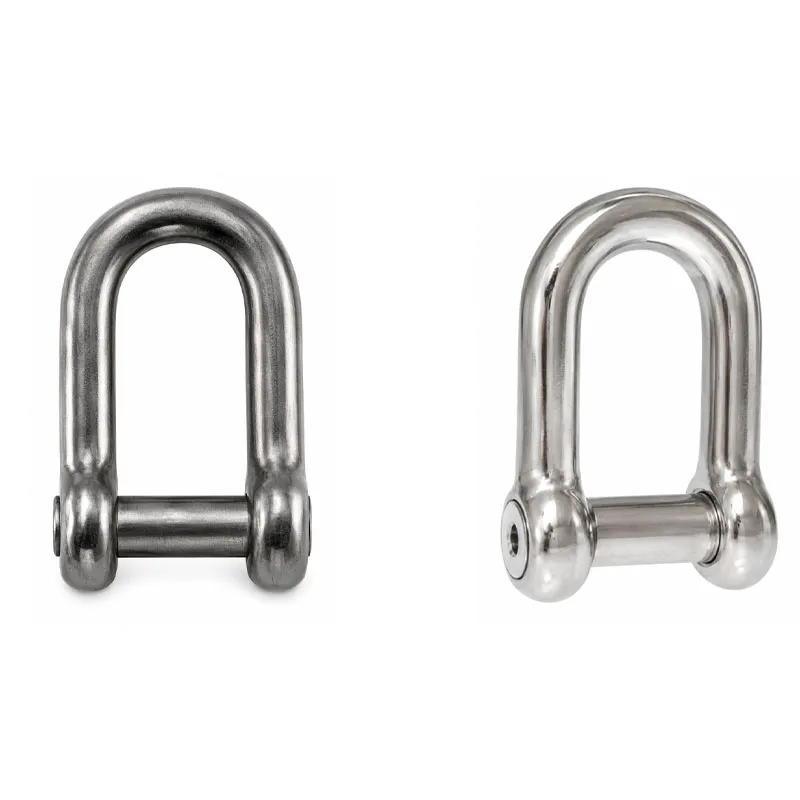
Slotted or Hexagon Sink Pin
A recessed pin design can provide a cleaner external profile and may be selected where a protruding head is undesirable.
Key Pin Shackle
A key pin shackle with bar offers a different opening and closing method and may suit selected marine applications requiring convenient handling.
Captive Pin
A captive design helps keep the pin associated with the shackle when opened, reducing the chance of losing a small component during installation.
Snap Shackle
A snap shackle uses a quick-release mechanism rather than a conventional threaded pin.
This makes it a different product family despite sharing the word “shackle.”
When building a product catalog, distributors should not group every closure system under a single generic description. Pin style is a meaningful buying criterion.
What Is the Difference Between a Shackle and a Snap Shackle?
A standard shackle usually requires the user to remove or loosen a pin before making the connection.
A snap shackle is designed for faster opening and closing.
HIGRACE’s product range includes configurations such as:
- Fixed snap shackle
- Eye swivel snap shackle
- Jaw swivel snap shackle
- Snap shackle body
The swivel versions combine quick-release functionality with a rotating connection.
Neither is universally better.
The correct choice depends on how frequently the connection must be opened, whether rotation is needed, and what technical requirements apply.
For related quick-connect products, distributors can also explore HIGRACE’s Snaps & Hooks category.
How Do You Match a Shackle with Chain, Rope, or Rigging Hardware?
Correct matching is one of the most important parts of shackle selection.
A shackle may connect perfectly to one fitting but poorly to another.
Before placing an order, check:
Pin Diameter
Will the pin pass through the chain link, eye, thimble, or fitting?
Internal Width
Does the connected component fit inside the shackle body without binding?
Internal Length
Is there enough space for the connection to move?
Body Diameter
Will the shackle body interfere with nearby hardware?
Connected Surface
Does the mating fitting create concentrated or uneven contact?
Consider a typical anchoring arrangement:
Anchor → Shackle → Chain → Swivel → Additional Connection Hardware
Every part must fit the next part.
This is one reason a broad supplier portfolio can be useful.
HIGRACE supplies not only shackles but also:
- Chains
- Anchor swivels
- Quick links
- Thimbles
- Turnbuckles
- Snap hooks
- Rings
- Anchors
- Other marine fittings
Buyers can therefore discuss several related connection products within one sourcing program rather than treating each component separately.
How Should Buyers Select High Tensile Shackles?
HIGRACE’s wider shackle portfolio also includes high tensile shackles such as G-210, G-209, G-2150, and G-2130 configurations.
These products belong to a more performance-focused category.
When selecting high tensile hardware, never rely only on:
- Product color
- Body thickness
- Model appearance
- “Heavy duty” wording
- Supplier photos
Instead, confirm the technical documentation for the specific product.
Depending on the application, buyers may need to review:
- Material
- Dimensions
- Working load information
- Breaking-load information
- Product standard
- Testing requirements
- Manufacturing process
- Batch inspection requirements
A high tensile product should only be used according to its specified rating and intended application.
This distinction is especially important for distributors selling into industrial rigging or load-handling markets.
What Should You Inspect Before Using a Marine Shackle?
Even good hardware requires inspection.
Before installation, check the shackle for:
- Bent body
- Distorted eyes
- Damaged threads
- Damaged pin
- Excessive wear
- Severe corrosion
- Cracks
- Unusual deformation
- Incorrect pin fit
The pin should engage correctly with the body.
Do not force a damaged pin into the shackle.
During service, inspect components periodically, especially in marine environments where salt, moisture, vibration, and movement can accelerate wear.
A stainless steel shackle can resist corrosion well, but stainless steel is not maintenance-free.
Cleaning salt deposits and checking mating surfaces helps maintain the overall connection.
For critical applications, follow the manufacturer’s inspection instructions and any applicable industry requirements.
Why Source Marine Shackles from HIGRACE?
HIGRACE Hardware Limited has focused on marine hardware, rigging hardware, and stainless steel precision investment casting since 2006.
Shackles are part of a much broader marine hardware portfolio.
Our product range includes:
- Dee shackles
- Bow shackles
- Long Dee shackles
- Twisted shackles
- Key pin shackles
- Flat shackles
- Snap shackles
- Swivel snap shackles
- High tensile shackles
Depending on product type and model, material options include stainless steel and galvanized steel solutions suitable for different purchasing requirements.
More importantly, HIGRACE is not limited to shackles.
Customers can source related products across:
Anchoring & Docking
Anchors, chains, anchor connectors, bow rollers, cleats, bollards, mooring products, and related hardware.
Rigging & Sail Control
Shackles, clips, thimbles, swivels, snap hooks, turnbuckles, terminals, blocks, and pulleys.
Deck Hardware
Rail fittings, hinges, hasps, lifting rings, deck fillers, thru-hulls, vents, and related boat fittings.
For distributors and wholesalers, this makes it possible to consolidate connected categories with one supplier.
Can HIGRACE Manufacture Custom Shackles?
Yes.
Not every market needs only catalog products.
A distributor or marine equipment manufacturer may require:
- Modified dimensions
- Special pin structure
- Different body geometry
- Specific stainless steel grade
- Custom surface finish
- Private-label packaging
- A new fitting developed from a sample
HIGRACE supports OEM and customized manufacturing based on drawings or samples.
Our manufacturing and product-development capabilities include:
- Dee Shackle vs Bow Shackle: Marine Shackle Guide | HIGRACE
The manufacturing route depends on the product design.
Engineering support can also help buyers evaluate dimensions, manufacturability, and production requirements before mass production.
HIGRACE’s quality-control capabilities can include material composition analysis, mechanical property testing, and tensile testing according to relevant product and project requirements.
For private-label buyers, customized labels, cards, boxes, and other packaging options can also be discussed.
This means a project can move from drawing → sample → manufacturing → inspection → branded packaging through one supplier.




 August 08, 2026