Explore practical knowledge about marine hardware, rigging systems, anchoring and docking equipment, stainless steel materials, product selection, installation and maintenance.
Types of Rigging Equipment: Uses, Selection & Safety Guide
November 06, 2026
Choosing the wrong rigging equipment can cause poor connections, damaged components, and serious lifting risks. With so many slings, shackles, turnbuckles, terminals, and tools available, finding the right setup can be challenging. Understanding their functions and limitations helps buyers select suitable rigging hardware for marine and industrial applications.
The main types of rigging equipment include wire rope slings, chain slings, shackles, hooks, turnbuckles, rigging screws, wire rope terminals, sleeves, lifting clamps, and hoists. Each serves a different purpose in connecting, tensioning, securing, or lifting loads. The right choice depends on load weight, working load limit, material, connection geometry, and operating conditions.
For marine hardware distributors, boat builders, industrial procurement teams, and rigging professionals, choosing compatible components is essential for safe and efficient operations. This guide explains common rigging equipment, how to select it, and what to consider when sourcing rigging hardware from a manufacturer.
What Is Rigging Equipment and Why Is It Important?
Rigging equipment refers to the components and tools used to connect, secure, tension, lift, or move loads. In industrial lifting, rigging involves preparing and connecting loads to suitable lifting equipment. In marine applications, rigging also includes wire ropes, tensioning devices, and fittings used to support and control sailing systems.
A complete rigging system may include a wire rope, sling, shackle, hook, turnbuckle, terminal, or specialized connector. Each component performs a specific function, and the complete assembly must be compatible with the intended application.
For example, a crane may lift heavy equipment using a rated sling and shackle assembly. A sailboat, however, may use stainless steel rigging screws and swage terminals to adjust and secure standing rigging.
Although both involve rigging, their engineering requirements are different.
What Are the Main Functions of Rigging Hardware?
Rigging hardware typically serves four purposes:
Connecting: Joining chains, wire ropes, slings, and structural fittings.
Tensioning: Adjusting tension in cables and rigging assemblies.
Terminating: Creating suitable end connections on wire ropes.
Lifting and handling: Supporting approved load-handling operations when components are properly rated.
The correct type of rigging depends on the required function.
A tensioning device designed for a marine cable assembly is not automatically suitable for overhead lifting. Likewise, a lifting accessory should not be selected solely because it fits an existing connection.
Understanding these differences is the first step toward choosing proper equipment.
What Are the Main Types of Rigging Equipment?
Different types of rigging equipment are used in marine, construction, manufacturing, and industrial applications.
Some components are designed for lifting heavy loads, while others provide tension adjustment, fastening, or permanent wire rope connections.
Wire Rope and Wire Rope Slings
Wire rope consists of multiple steel wires arranged into strands, which are formed into a flexible rope.
Wire rope slings are specifically designed assemblies used in suitable lifting and handling operations.
They can provide flexibility and strength, but their performance depends on rope construction, terminal design, sling configuration, and the manufacturer’s rated capacity.
Marine wire rope assemblies may instead be used for standing rigging, cable tensioning, and structural connections.
Chain Slings
Chain slings are commonly used for lifting in industrial environments when appropriately rated.
They can be useful for handling heavy or irregular materials, including certain construction materials and machinery components.
A chain sling assembly must include compatible, rated hooks and connectors.
Shackles and Rigging Hooks
A shackle is a removable connector used to join appropriate rigging components.
Bow shackles and dee shackles are common designs. Their suitability depends on the loading arrangement and manufacturer specifications.
Rigging hooks connect suitable lifting accessories or handling equipment.
Some lifting hooks incorporate safety latches or other retention features, but the correct hook design depends on the intended operation.
Turnbuckles and Rigging Screws
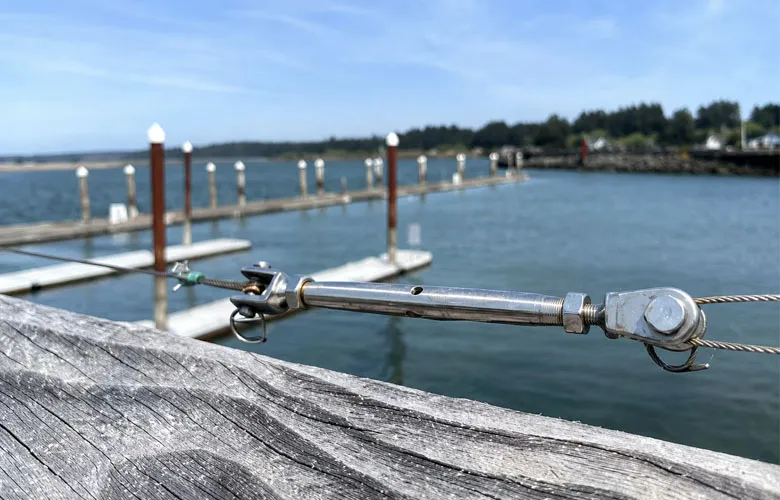
Turnbuckles and rigging screws provide adjustable tension in cable and structural connections.
They are commonly used in marine rigging, wire rope assemblies, and selected industrial support systems.
HIGRACE offers several turnbuckle and rigging screw configurations, including eye-eye, hook-eye, hook-hook, jaw-jaw, jaw-swage stud, and toggle-toggle designs.
Wire Rope Terminals and Sleeves
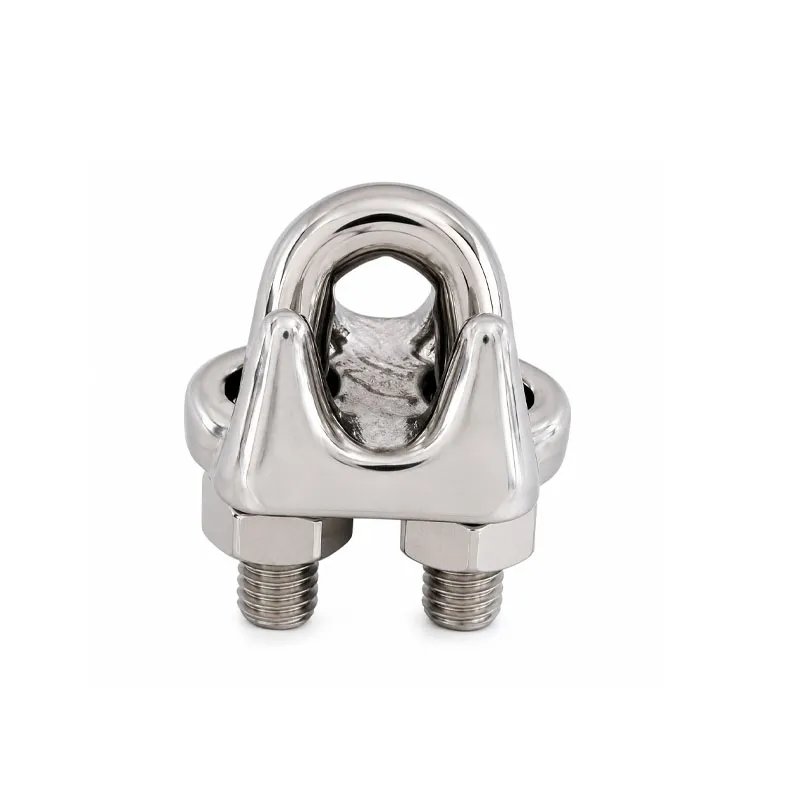
Wire rope terminals create end connections for cable assemblies.
Sleeves, also called ferrules in many applications, are used in compatible wire rope termination systems.
The selected terminal or sleeve must match the wire rope and the specified installation method.
Hoists, Lifting Clamps, and Lifting Beams
Hoists, plate lifting clamps, spreader bars, and lifting beams are used in specialized material-handling operations.
These products may form part of a crane rigging system, but their rated capacities, installation procedures, and inspection requirements differ.
They are included here to explain the broader rigging equipment category, not as a claim that every product is offered by HIGRACE.
Comparison of Common Rigging Equipment
Equipment
Primary Function
Common Applications
Wire rope sling
Rated load connection
Industrial lifting
Chain sling
Rated load handling
Machinery and construction
Shackle
Connect rigging components
Marine and industrial systems
Rigging hook
Connect compatible lifting accessories
Cranes and hoists
Turnbuckle
Adjust cable tension
Marine and structural connections
Rigging screw
Precise tension adjustment
Sailboat standing rigging
Swage terminal
Terminate wire rope
Marine and architectural cables
Wire rope sleeve
Form compatible cable terminations
Wire rope assemblies
Crimping tool
Install compatible compression fittings
Rigging assembly work
Lifting clamp
Grip approved materials
Specialized lifting operations
Important: Similar-looking components can have different capacities and intended uses. Product selection must follow the manufacturer’s technical information.
How Do Turnbuckles and Rigging Screws Work?
Turnbuckles and rigging screws are essential rigging hardware for applications requiring adjustable cable tension.
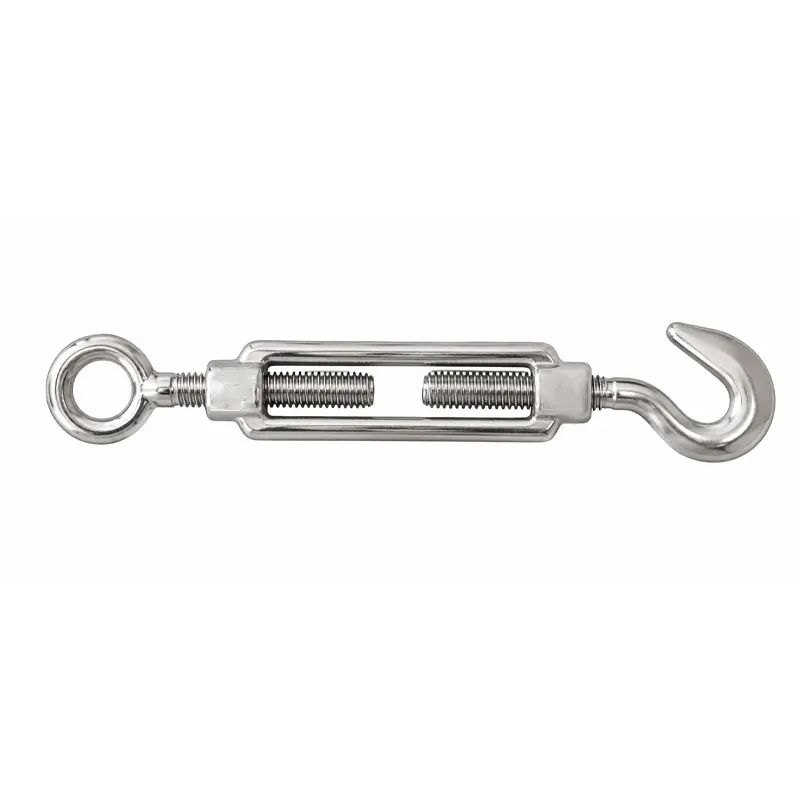
They generally use a central threaded body and end fittings with opposite-hand threads. Rotating the body changes the distance between the connection points, allowing the assembly to be tightened or loosened.
These products are widely used in sailboat rigging, marine fittings, and suitable structural cable systems.
Common Turnbuckle End Configurations
The connection style determines how the tensioning component joins the rest of the assembly.
Eye-Eye Turnbuckles
Both ends use eye fittings. This arrangement is commonly used with compatible connectors and fastening components.
Hook-Eye Turnbuckles
One end has a hook, while the other has an eye. This configuration may be suitable for selected adjustable connections where the hook is appropriate for the application.
Hook-Hook Turnbuckles
Both ends use hook fittings. These can provide convenient attachment in certain tensioning assemblies, but must not be used where unintended disengagement could create a hazard.
Jaw-Jaw Turnbuckles
Both ends have jaw fittings, allowing connections through compatible pins and attachment points.
HIGRACE lists DIN1480 eye-eye, hook-eye, and hook-hook turnbuckles in AISI 316 stainless steel and electro-galvanized carbon steel versions. It also provides JIS jaw-jaw and US-pattern hot-dip galvanized models.
Rigging Screws for Marine Cable Tensioning
Marine rigging screws are commonly selected for controlled tension adjustment in sailboat wire rope systems.
HIGRACE supplies:
Rigging Screw Jaw-Jaw
Rigging Screw Jaw-Swage Stud
Rigging Screw Toggle-Toggle
Its AISI 316 stainless steel jaw-jaw series includes metric sizes from M5 to M20.
The jaw-swage stud series also specifies compatible wire rope diameters, making it useful for selecting matching components.
What Dimensions Should Buyers Compare?
A turnbuckle or rigging screw should be selected using more than its thread designation.
Important specifications include:
Thread size and thread direction
Body length
Minimum and maximum assembled length
Adjustment range
End fitting style
Pin diameter and connection compatibility
Required load rating, where applicable
For example, HIGRACE’s AISI 316 M10 Jaw-Jaw Rigging Screw, product number 151010, lists a 125 mm body length and a 220–300 mm overall length range.
This provides useful dimensional information, but it does not establish an approved lifting capacity.
Buyers can compare additional options in the HIGRACE Rigging Screws and Turnbuckles product ranges.
What Should B2B Buyers Consider When Sourcing Rigging Hardware?
For international distributors, marine equipment manufacturers, and OEM procurement teams, selecting a rigging hardware supplier requires more than comparing prices.
Consistent dimensions, material specifications, product availability, and technical communication can all affect purchasing efficiency.
Confirm the Available Product Range
A supplier offering related rigging components may help simplify multi-product procurement.
For example, a boat equipment manufacturer might need rigging screws, wire rope terminals, sleeves, and installation tools.
HIGRACE supplies these categories through its marine rigging hardware portfolio.
Request Clear Technical Specifications
Before ordering, buyers should confirm the dimensions and characteristics of the exact product.
For a turnbuckle, this may include thread size, body length, adjustment range, material, and end fitting style.
For a swage terminal, wire rope diameter, pin or eye dimensions, hole depth, and overall length may be important.
For crimping tools, the compatible wire or sleeve specifications and installation requirements should be established.
Consider OEM and Custom Manufacturing
Not every assembly can use a standard catalog component.
Marine hardware brands and equipment manufacturers may require custom dimensions, materials, special end connections, or private-label packaging.
HIGRACE provides drawing-based and sample-based OEM manufacturing services, engineering support, material selection assistance, quality inspection, and customized packaging.
Custom load-bearing designs should undergo appropriate engineering review and validation before use.
FAQ
What are the most common types of rigging equipment?
Common types include wire rope slings, chain slings, shackles, hooks, turnbuckles, rigging screws, wire rope terminals, sleeves, and lifting accessories. Marine rigging places particular emphasis on tensioning and cable connection hardware, while industrial lifting requires equipment rated for the intended loads.
What is the difference between a rigging screw and a turnbuckle?
Both adjust tension through threaded components. In marine applications, rigging screws often refer to specialized tensioning fittings used with sailboat wire ropes, while turnbuckles is a broader term covering different end configurations for adjustable cable and structural connections. Terminology varies by market and manufacturer.
What equipment is needed for crane rigging?
A crane rigging arrangement may require rated slings, shackles, hooks, lifting beams, or other approved accessories. The exact equipment depends on load weight, center of gravity, lifting points, and the lift plan. All components must be suitable for the intended operation.
What materials are commonly used for marine rigging hardware?
AISI 316 stainless steel is widely used for corrosion-resistant marine fittings. Galvanized steel is another option for specified applications. Aluminum and copper are also used in compatible wire rope sleeve systems.

 English
 French
 Arabic
 Spanish



 November 06, 2026