Explore practical knowledge about marine hardware, rigging systems, anchoring and docking equipment, stainless steel materials, product selection, installation and maintenance.
Anchor & Mooring Guide: How to Choose the Right Boat Mooring Anchor and System
August 08, 2026
A boat can drift, swing, strike a dock, or overload its fittings when the wrong anchor or mooring setup is used. The problem becomes worse with wind, tide, changing seabed conditions, and poor hardware matching. A well-planned anchor and mooring system keeps the boat secure and makes daily operation easier.
The right boat mooring anchor depends on boat size, water depth, bottom conditions, expected weather, and whether the boat needs temporary anchoring or permanent mooring. Fluke and plow anchors suit many mobile anchoring needs, while mushroom, helix, and screw-anchor systems may serve permanent moorings. A complete system also needs correctly matched chain, shackles, swivels, mooring lines, cleats, and dock hardware.
What Is the Difference Between Anchoring and Mooring a Boat?
The difference between anchoring and mooring starts with how the boat is secured. Anchoring usually means lowering a portable boat anchor from the vessel so it sets into the seabed. The boat can later retrieve the anchor with an anchor line, chain, or windlass and move to another location.
Mooring usually refers to keeping a boat in a more defined or fixed position. A permanent mooring may use a seabed anchor, heavy chain, swivel, mooring buoy, and mooring line. At a marina or pier, boat mooring may also mean securing the boat to dock cleats with dock lines.
In simple terms:
Both anchoring and mooring depend on correctly matched hardware. A strong anchor is not enough if the shackle, swivel, chain, line, or deck connection becomes the weak point.
For related hardware, buyers can explore HIGRACE’s Anchoring & Docking solutionsfor connected marine products used throughout these systems.
How Does a Boat Mooring System Keep Your Boat in Place?
A mooring system transfers forces from the boat through the mooring line and connection hardware into an anchor point. That anchor point may be located on the seabed, a floating structure, a fixed dock, or a pier.
A typical floating mooring may contain:
Mooring anchor
Ground or bottom chain
Connecting shackles
Swivel
Upper chain or rope
Mooring ball or buoy
Mooring pendant or line
Boat connection point or cleat
Each part matters. When wind, waves, or tide move the boat, the system must control that movement without allowing components to disconnect or overload.
A properly planned setup helps keep your boat from drifting while still allowing controlled movement. This is especially important in a mooring field, where several boats may swing around individual buoys and need enough separation.
For commercial buyers, system thinking is important. A distributor sourcing only the anchor may still need complementary marine chains, shackles, swivels, cleats, and mooring rope to build a complete product offering.
Which Anchor Type Is Best for Different Bottom Conditions?
There is no universal best anchor for every boat and every seabed. Selecting the right anchor requires understanding how the anchor interacts with sand, mud, gravel, rock, and other bottom conditions.
A fluke anchor, for example, relies on its broad fluke surfaces to develop holding resistance. A plow anchor is designed differently and may reset as the boat changes direction. A mushroom anchor is often associated with permanent or semi-permanent mooring rather than everyday anchoring from a cruising boat.
A helix or screw anchor works differently again. Instead of simply resting on or digging through the seabed like a conventional portable anchor, the anchors screw into suitable bottom material. These systems often require engineering and installation knowledge.
Hard or rocky seabeds can present very different challenges from soft mud. That is why professional buyers should avoid marketing one anchor type as suitable for every environment.
HIGRACE supplies multiple marine anchor configurations within its Anchor & Mooring product range, allowing distributors and boat builders to build a broader selection for different markets.
How Do You Select the Right Anchor for Boat Size and Water Depth?
Choosing a right anchor is not simply a matter of matching a product to the length of a boat.
Important selection factors include:
Boat size
Hull type
Windage
Vessel displacement
Water depth
Expected wind and wave conditions
Tide range
Seabed composition
Anchor design
Chain and line configuration
Intended use
A lightweight fishing boat used in shallow water has different requirements from a cruising sailboat, pontoon boat, or larger yacht. Even boats of similar length may impose very different loads because of hull shape and weight.
The size and weight of the anchor therefore need to be evaluated alongside manufacturer recommendations and the complete anchor system.
For a pontoon boat, windage can be important because the large above-water structure can catch wind. Buyers searching for an anchor for pontoon applications should evaluate the boat’s actual operating conditions instead of selecting purely by boat length.
The same principle applies to small boat, fishing boats, jet ski support craft, sailboat, cruise vessels, and sport yachts: each application has its own operating profile.
What Creates Secure Boat Mooring at a Dock, Marina, or Pier?
Not every mooring setup uses a seabed anchor. At a dock or pier, the process of securing your boat usually relies on dock lines, marine cleats, fenders, and properly placed connection points.
The objective is to hold the boat safely while allowing enough controlled movement for water-level changes, waves, and tide.
Typical components include:
Bow line
Stern line
Spring lines
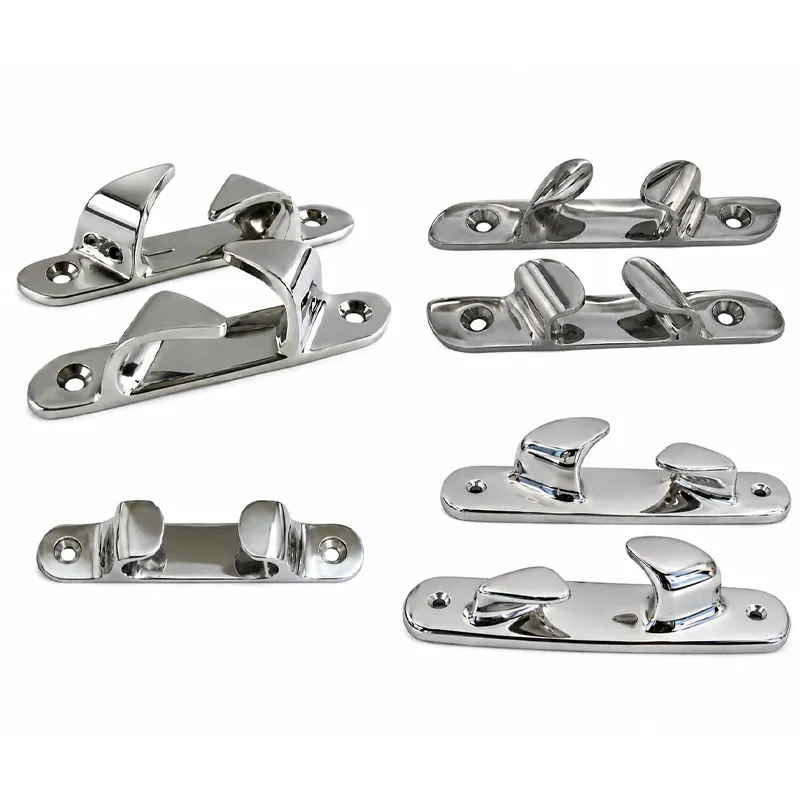
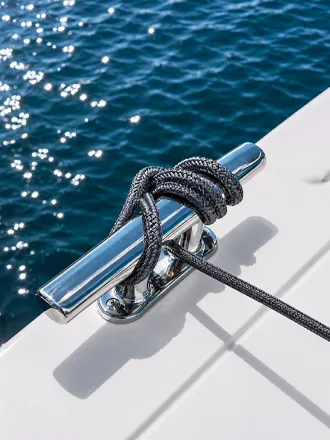
Dock cleats
Boat cleats
Fender
Bumper
Mooring rope
Chocks
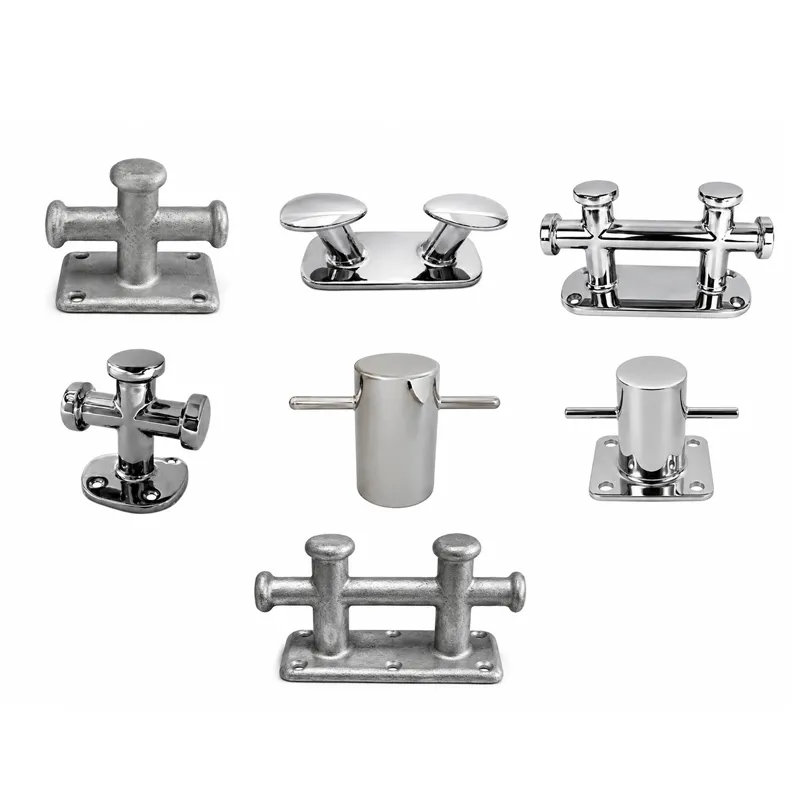
Bollards
A boat secured too tightly may place unnecessary loads on deck fittings as water level changes. A boat secured too loosely may strike the dock.
Fenders or a suitable bumper create separation between hull and dock. Spring lines help control forward and backward movement. Cleats and bollards provide attachment points.
Some boat owners also use mooring whips, which normally employ flexible poles—often fiberglass poles—to help keep a boat away from the dock. These are a different approach from conventional line-and-fender arrangements and should be selected for the specific docking environment.
For related mounting and connection products, HIGRACE’s Deck Hardware solutions cover marine fittings that complement anchoring and docking systems.
When Should You Use a Mooring Buoy, Mushroom Anchor, or Helix System?
A mooring buoy can provide a convenient connection point when a boat repeatedly uses the same water location.
Under the buoy, however, the system may be much more complex than it looks from the surface.
A permanent setup may include a mooring anchor, bottom chain, upper chain, swivels, shackles, buoy, and pendant. The anchor itself may be a mushroom, heavy conventional anchor, concrete system, helix, or another engineered solution depending on local requirements.
A mushroom anchor develops resistance through its shape and interaction with suitable seabed material. Helical or anchors screw into the bottom and can provide high resistance when properly designed and installed.
The suitability of each approach depends on:
Seabed condition
Vessel load
Water depth
Swing radius
Local regulation
Installation method
Inspection requirements
Environmental exposure
A floating buoy is therefore only the visible part of the system.
If you are a distributor selling mooring equipment, it is useful to educate customers that a buoy alone does not create a secure mooring. Every underwater connection must be selected and maintained as part of the full system.
What Hardware Completes an Anchor and Mooring System?
An anchor often receives most of the attention, but the connection hardware deserves equal care.
A complete marine setup can use a combination of:
Chains
Chain adds abrasion resistance, strength, and weight to many anchor arrangements.
Shackles
A shackle connects anchors, chains, swivels, ropes with thimbles, or other components.
Swivels
Swivels can help accommodate rotation in selected arrangements.
Anchor line
The line may be rope, chain, or a combination depending on the system.
Thimbles
Thimbles protect rope eyes from concentrated wear at connection points.
Cleats and bollards
These provide attachment points on the boat, dock, or marina infrastructure.
Bow rollers
A bow roller helps guide an anchor and chain at the bow and supports anchor handling.
Windlass
On larger or more heavily equipped boats, a windlass assists in retrieving anchor and chain.
HIGRACE manufactures a broad range of connected components. Buyers sourcing an anchor program can also review marine shackles and connection hardware and clips, thimbles and swivels rather than treating each product family as an isolated purchase.
This helps distributors build a more complete product category and makes specification matching easier.
Why Do Stainless Steel and Galvanized Hardware Matter in Mooring Equipment?
Marine environments expose hardware to moisture, salt, changing temperatures, and mechanical wear.
HIGRACE supplies marine hardware in materials that include AISI 316 stainless steel for many marine applications, together with carbon steel and galvanized options depending on the product.
AISI 316 stainless steel is widely selected for marine fittings because of its corrosion resistance. Other components may use hot-dip galvanized carbon steel where the design, cost target, and application make that material appropriate.
The correct material depends on the actual product. A buyer should confirm:
Material grade
Surface treatment
Product dimensions
Connection compatibility
Load requirements where applicable
Environmental exposure
Inspection expectations
The term galvanize can also refer to different processes. Electro-galvanized and hot-dip galvanized finishes are not identical. Buyers should specify the required finish instead of using “galvanized” as the only purchasing requirement.
The most durable system is not created by selecting the most expensive material for one component. It comes from matching all parts correctly.
How Should Distributors and Boat Builders Evaluate Mooring Equipment Suppliers?
For a professional buyer, the supplier behind the hardware can matter as much as the hardware itself.
A distributor may buy anchors today but later need chains, shackles and swivels, cleats, bollards, rail fittings, deck fittings, blocks, or boat accessories. Using a supplier with connected product categories can reduce purchasing complexity.
When evaluating a marine hardware manufacturer, ask:
Does the supplier manufacture marine and rigging hardware?
Can it provide related categories from one source?
Are materials clearly specified?
Is quality inspection available?
Can the supplier work from drawings or samples?
Is engineering support available?
Can private-label packaging be supplied?
Can related products be consolidated in one order?
Can custom dimensions or components be developed?
These questions matter to wholesalers, importers, boat builders, yacht manufacturers, and private-label brands because their purchasing decisions affect an entire product range.
HIGRACE Hardware Limited has manufactured marine and rigging hardware since 2006. Our business covers Anchoring & Docking, Deck Hardware, and Rigging & Sail Control, supported by standard product supply and OEM development.
Why Choose HIGRACE for Anchor & Mooring Hardware Sourcing?
At HIGRACE, we do not view an anchor as an isolated metal product.
Our customers often need a connected sourcing program. An anchor may be purchased with chain. The chain may need a shackle and swivel. Mooring products may need rope, cleats, bollards, or bow hardware. Distributors may also need branded packaging.
That is why our marine portfolio extends across:
Anchors
Chains
Shackles
Swivels
Cleats
Bollards
Mooring rope
Mooring springs
Bow rollers
Deck fittings
Rail fittings
Rigging hardware
Boat accessories
For suitable products, materials include AISI 316 stainless steel, AISI 304 stainless steel, carbon steel, electro-galvanized steel, and hot-dip galvanized options depending on the model.
Our capabilities go beyond standard catalog supply. HIGRACE also supports OEM and customized manufacturing based on drawings or samples, backed by engineering assistance and quality inspection.
Manufacturing capabilities include precision stainless steel investment casting, also known as lost-wax casting, along with forging, stamping, die casting, CNC machining, and other suitable processes depending on the component.
For marine hardware distributors and private-label buyers, customized packaging is another part of the sourcing process. Labels, cards, retail packaging, and customer branding can be discussed alongside the hardware itself.
If your current sourcing involves several separate suppliers, consolidating compatible categories with one experienced manufacturing partner may make procurement simpler.
Explore our Rigging & Sail Control hardware if your anchor and mooring product program also includes turnbuckles, snap hooks, blocks, or other marine connection components.

 English
 French
 Arabic
 Spanish


 August 08, 2026